
What Are Dental Implants and How Long Do They Last?
How long do dental implants last? With proper care, the titanium implant post can last a lifetime, while the visible crown typically needs replacement every 10 to 15 years. Long-term periodontal studies point to very high implant success rates even a decade after placement, making them one of the most durable tooth replacement options available today.
A dental implant isn’t a single piece. It’s a small system made of three parts working together:
- The post: A titanium screw surgically placed into the jawbone, acting as a new tooth root.
- The abutment: A connector piece that links the post to the visible restoration.
- The crown: The custom-made porcelain tooth that sits above the gumline.
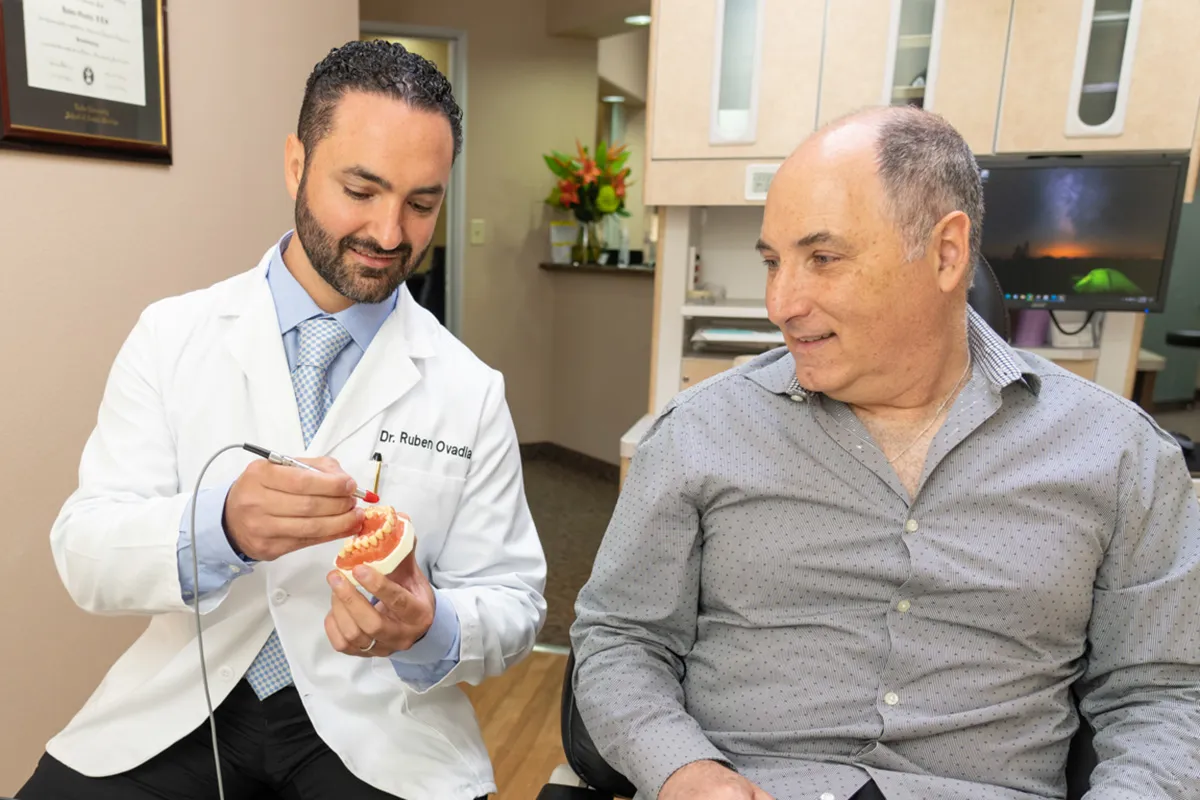
At Dallas Periodontal Associates, Dr. Ovadia and Dr. Tanur have placed thousands of implants over more than two decades of caring for patients. As periodontist dental specialists and Diplomates of the American Board of Periodontology, a status earned by only 10% of periodontists, our doctors focus on saving teeth as their number one priority and only recommend implants when they’re the right long-term solution for your health.
How Dental Implants Fuse With Bone to Last So Long
Dental implants last so long because of osseointegration, a biological process where living bone cells grow directly onto the titanium implant post. Titanium is biocompatible and corrosion-resistant, so your body accepts it rather than rejecting it. Over three to six months of healing, the bone locks the implant in place, creating a foundation that mimics a natural tooth root.
The process unfolds in a few clear stages:
- Placement: The titanium post is gently inserted into the jawbone at the site of the missing tooth.
- Healing: Bone cells begin migrating toward the implant surface within days.
- Integration: Over the following months, new bone bonds tightly to the titanium, anchoring it securely.
- Restoration: Once fully integrated, the abutment and crown are attached to complete the tooth.
This bone-to-implant bond is what sets implants apart from bridges or dentures. A traditional bridge relies on neighboring teeth for support, while dentures rest on the gums. Neither one stimulates the jawbone the way a natural tooth root does. When your jaw loses that stimulation, bone density fades over time, changing your facial structure and weakening surrounding teeth.
An implant transmits chewing forces into the bone just like a natural root, keeping the jaw active and healthy. That’s why our doctors often describe implants as one of the few tooth replacement options that actively protects your long-term oral health for years to come.
Benefits of Long-Lasting Dental Implants
Choosing a solution that lasts decades brings real advantages to your daily life, your appearance, and your wallet. Here are the qualities patients at Dallas Periodontal Associates appreciate most about implants.
Why Do Implants Offer Permanent Stability and Comfort?
Unlike bridges or dentures, the implant post is designed to stay in place for life with proper care. That permanence means you can bite, chew, and smile with confidence. Patients typically regain around 85 to 90% of the biting power of natural teeth, so eating the foods they love becomes second nature again. There’s no slipping, no adhesive, and no daily removal to think about, which makes implants feel like a truly natural part of your smile.
How Do Implants Protect Your Jawbone and Save You Money?
By stimulating the bone during chewing, implants help prevent the sunken look that often follows tooth loss, preserving both your jawbone and facial structure. They also stand alone, so there’s no need to grind down healthy teeth on either side the way a bridge requires. Yes, the upfront investment is higher, but you avoid the repeated replacements that dentures and bridges demand, making implants cost-effective over the long haul. For many patients, that combination means speaking clearly and no longer thinking about their teeth throughout the day.
Dental Implants vs. Bridges and Dentures: Longevity Compared
Dental implants outlast every other tooth replacement option. The implant post can last 25 years or a lifetime, while traditional bridges typically last 10 to 15 years and dentures usually need replacement every 5 to 10 years. Implants also preserve jawbone density, something bridges and dentures cannot do, giving them the highest long-term success rate.
Here’s a side-by-side comparison to help you weigh your options:
| Feature | Dental Implants | Bridges | Dentures |
|---|---|---|---|
| Average lifespan | 25+ years (post can last a lifetime) | 10 to 15 years | 5 to 10 years |
| Preserves jawbone | Yes | No | No |
| Affects neighboring teeth | No | Yes (requires grinding) | No |
| Feels like natural teeth | Yes | Somewhat | Less so |
| Long-term cost | Higher upfront, lower over time | Moderate, with replacements | Lower upfront, higher over time |
| Maintenance | Brush and floss normally | Special flossing required | Removal and soaking daily |
When you look at the full picture, implants tend to be the most cost-effective option over a lifetime. Dr. Tanur and Dr. Ovadia will walk you through what makes sense for your specific situation, because good enough is not good enough when it comes to your long-term health.
What Factors Affect Dental Implant Longevity?
The biggest factors in how long an implant lasts are your oral hygiene, whether you smoke, and the health of your gums. Most of these are within your control, and small daily choices add up over the years.
- Oral hygiene habits. Daily brushing and flossing matter most. Bacteria that cause periodontal disease can also cause peri-implantitis, an infection around the implant that leads to bone loss.
- Smoking. Tobacco reduces blood flow to the gums, slows healing, and raises the risk of implant failure. If you smoke, quitting before and after placement improves outcomes.
- Periodontal disease. Active gum infection is the silent threat to your smile and health. Untreated periodontal disease can undermine the bone that supports your implant.
- Bruxism (teeth grinding). Grinding puts excessive force on the crown and can crack or loosen it. A custom nightguard protects your investment.
- Implant location and bite forces. Back molars bear more chewing pressure than front teeth, which can affect crown wear over time.
- Overall health. Conditions like uncontrolled diabetes, autoimmune disorders, and certain medications can affect healing and long-term stability. We look at your whole health picture, because oral health supports whole-body wellness.
- Regular professional cleanings. Implants need specialized care from a periodontist dental specialist to keep the surrounding tissue healthy.
Who Is a Good Candidate for Dental Implants?
Most healthy adults with missing teeth are good candidates for dental implants, but a few factors help determine success. During your consultation, our doctors evaluate your bone, gums, and overall health to see if implants are right for you.
You’re likely a strong candidate if you have:
- Adequate jawbone density to support the implant post. When bone is thin, bone grafting can rebuild the foundation.
- Healthy gums free of active periodontal disease. Any infection must be treated first.
- Non-smoker status or a willingness to quit. Even a break during healing improves results.
- Commitment to oral hygiene and regular professional cleanings.
- Generally good overall health, with any chronic conditions well-managed.
Even if you’ve been told you’re not a candidate elsewhere, it’s worth a second opinion. Advances in bone grafting, sinus lifts, and biologics like platelet-rich fibrin (PRF) have made implants possible for many patients who previously couldn’t have them. As Diplomates of the American Board of Periodontology, our doctors are trained to handle complex cases that general practices may not be able to treat.
Frequently Asked Questions About Dental Implant Longevity
Can dental implants last a lifetime?
Yes, in many cases the titanium implant post does last a lifetime with proper care. The crown attached to the top is more likely to need replacement over the years because of normal wear from chewing, but the foundation itself is remarkably durable. Consistent oral hygiene and regular professional cleanings are the biggest factors in reaching that lifetime mark.
How often do implant crowns need replacement?
Implant crowns typically last 10 to 15 years, though some last much longer. Wear, minor damage, or changes in your bite may eventually call for a new crown. The good news is that replacing a crown is a straightforward process because the implant post itself stays right where it is.
Do dental implants ever fail?
Implant failure is uncommon. When failure does happen, it’s usually due to infection, poor healing, uncontrolled periodontal disease, or heavy smoking. Catching problems early through regular exams is key, which is why we monitor your implants closely at every visit and keep you informed each step of the way.
How do I make my dental implants last longer?
Treat your implants like your natural teeth, only with a bit more attention. Brush twice a day, floss daily around the implant, avoid smoking, wear a nightguard if you grind your teeth, and keep up with professional cleanings. Small habits add up to decades of results.
Are dental implant cleanings different from regular cleanings?
Yes. Implants require specialized instruments and techniques to avoid scratching the titanium or damaging the surrounding tissue. At Dallas Periodontal Associates, we use tools like Glycine Air Polishing and precise hand instruments designed specifically for implant care. This is one reason patients often feel like family here, because we tailor every cleaning to what your implants and gums truly need.
If you’re considering dental implants or want to know how to protect the ones you already have, Dr. Ovadia and Dr. Tanur are here to help. Patients across Dallas turn to our practice for a friendly, caring & comfortable place to get answers and lasting results. The team at Dallas Periodontal Associates believes in empowering and supporting you every step of the way, so you feel confident, informed, and truly cared for. Request an appointment to learn more about your options.