What Are Zygomatic Implants?
Zygomatic implants are longer implants anchored into the zygoma (cheekbone) rather than the upper jaw. This approach gives patients with significant bone loss a stable foundation for a full arch of teeth without the extensive bone grafting that traditional implants call for. At Dallas Periodontal Associates, our board-certified periodontists use this technique for carefully selected cases.
Standard dental implants rely on healthy jawbone volume. When the upper jaw has resorbed after years of tooth loss, denture wear, or advanced periodontal disease, there simply isn’t enough bone to hold a traditional implant securely. That’s where zygomatic implants come in.
The following points show what makes them different:
- Anchor point: The dense zygomatic bone in the cheek, which rarely resorbs
- Length: Significantly longer than conventional implants to reach that bone
- Placement: Angled through the upper jaw and into the zygoma
- Purpose: Designed specifically for patients with severe upper jaw bone loss
- Grafting: Often avoids or reduces the need for sinus lifts and bone grafts
For patients who’ve been told they aren’t candidates for implants, this option can change the conversation. Instead of years of grafting procedures with uncertain outcomes, you may be able to receive a fixed, non-removable set of teeth in a much shorter timeframe.
How Do Zygomatic Implants Work?
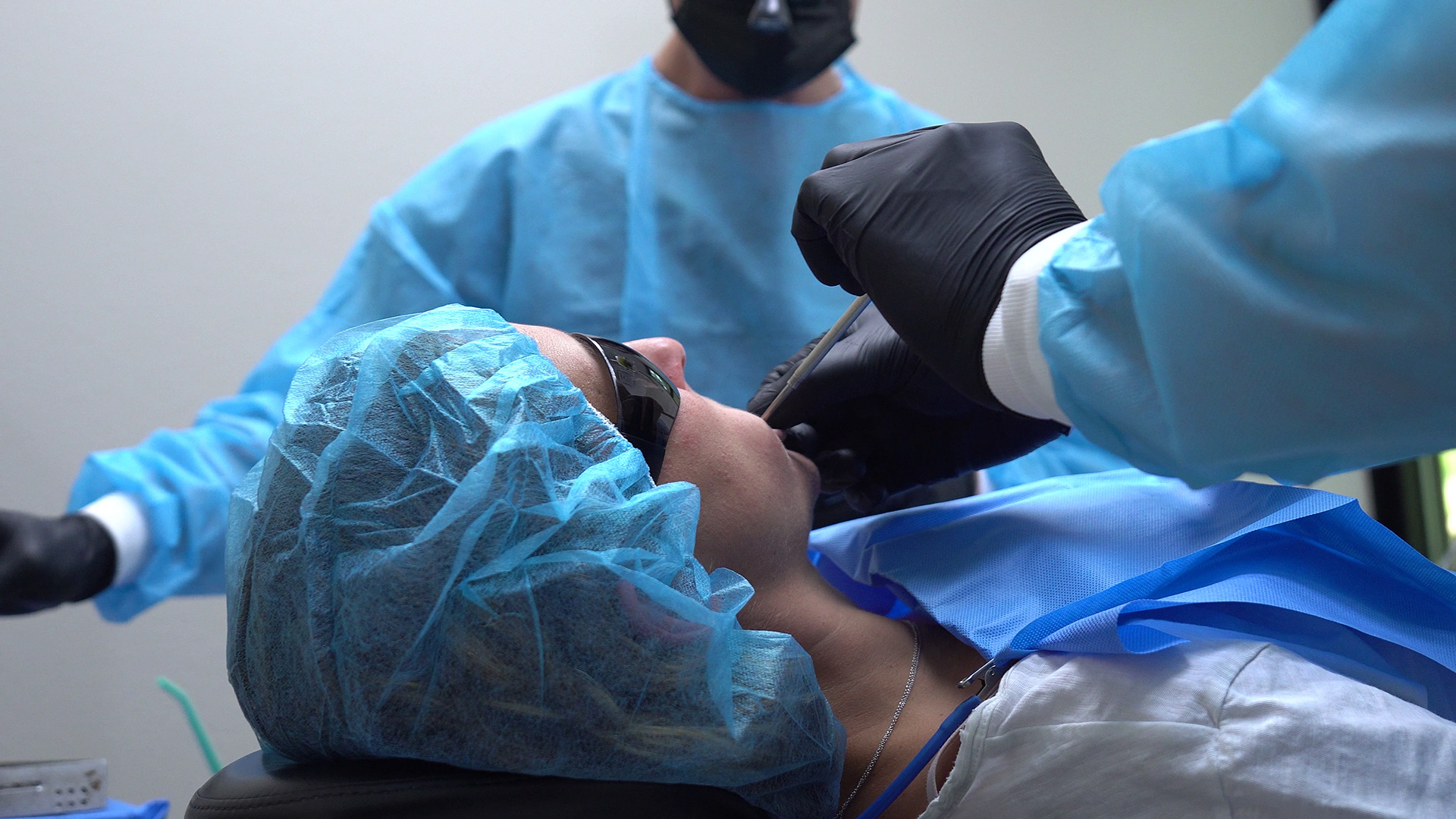
Zygomatic implants are placed into the cheekbone in a single surgical visit under sedation. After a 3D CT scan confirms your candidacy, the doctors anchor the implants, attach same-day temporary teeth, and let the implants heal before placing your final restoration.
Here is what to expect at each stage:
- Consultation and imaging. Dr. Tanur and Dr. Ovadia, board-certified periodontists, review your medical history, examine your mouth, and use a 3D CT scan (CBCT) to plan implant angles with precision. AI-integrated treatment planning helps the team map the safest, most stable placement path for patients across Dallas.
- Surgical placement. Under IV sedation for your comfort, the implants are anchored into the dense zygomatic bone. In many cases, two zygomatic implants are combined with two or four traditional implants toward the front of the jaw to support a full arch.
- Same-day temporary teeth. Most patients leave with a fixed provisional bridge attached the same day. You’ll go home with functional teeth, not a removable denture.
- Healing and integration. Over the next several months, the implants fuse with the bone. During this time, you’ll follow soft-food guidelines and attend follow-up visits so the doctors can monitor healing.
- Final restoration. Once integration is complete, your permanent, custom bridge is placed. This is the restoration you’ll wear long-term for eating, speaking, and smiling with confidence.
Benefits of Zygomatic Implants
For patients with severe upper jaw bone loss, zygomatic implants offer advantages that traditional approaches can’t match. The biggest one? You may skip months, or even years, of preparatory grafting.
Why Do Zygomatic Implants Avoid Bone Grafting?
Because the implants anchor in the dense cheekbone rather than the deficient upper jaw, sinus lifts and extensive grafting are usually unnecessary. This is one of the most meaningful benefits for people who’ve spent years being told they lack the bone for implants. The key advantages break down like this:
- No bone grafts in most cases. The cheekbone provides a stable anchor without added grafting procedures.
- A faster treatment timeline. Traditional graft-and-wait approaches can take 12 to 18 months before implants are even placed. Zygomatic implants shorten that considerably.
- Fixed, non-removable teeth. Your new teeth stay in place. They look natural, feel secure, and function much like natural teeth.
- Strong chewing power. You’ll be able to enjoy the foods you love again, from fresh vegetables to a hearty dinner with the family.
- Facial support. Because the implants provide structural support, they help maintain your facial contours and prevent the sunken look that comes with prolonged tooth loss.
- Long-term reliability. Zygomatic implants have shown strong long-term success rates in qualified patients.
How Do Zygomatic Implants Improve Quality of Life?
Patients across Dallas often describe this as regaining not just teeth, but confidence. Being able to smile, speak clearly, and eat comfortably touches every part of daily life. When you’re no longer hiding your smile or avoiding certain foods, the difference shows up in how you interact with the people around you. It’s a reminder that oral health supports whole-body wellness, and that restoring function does far more than fill an empty space in your mouth.
Comparing Zygomatic Implants to Traditional Implants and Bone Grafting
Traditional implants require adequate jawbone. When that bone isn’t there, the usual path is bone grafting, sometimes multiple procedures, followed by months of healing before implants can even be considered. Zygomatic implants take a different route by bypassing the deficient jawbone entirely.
The table below shows how the two approaches compare:
| Factor | Traditional Implants + Grafting | Zygomatic Implants |
|---|---|---|
| Bone requirement | Adequate jawbone or successful grafting first | Uses dense cheekbone instead |
| Number of surgeries | Often multiple (graft, then implant) | Typically a single surgical visit |
| Treatment timeline | 12-18+ months from start to final teeth | Same-day temporary teeth, final restoration in months |
| Bone grafting needed | Usually yes | Rarely |
| Ideal candidate | Patients with sufficient bone volume | Patients with severe upper jaw bone loss |
| Cost pattern | Cumulative cost of grafts + implants | Higher per-implant cost, fewer total procedures |
For patients whose prior grafts have failed, or whose bone loss is too advanced for grafting to be reliable, zygomatic implants may be the only fixed-teeth option. This is a conversation worth having with a periodontist who’s evaluated your specific anatomy on a 3D CT scan.
How Much Do Zygomatic Implants Cost?
Zygomatic implant costs depend on how many implants you need, whether one or both arches are being treated, the type of sedation used, and the imaging and lab work involved in your final restoration. Every case is different, which is why a consultation and 3D scan are the only way to get an accurate estimate.
Several factors influence the total cost:
- Number of implants. Some patients need two zygomatic implants combined with traditional implants. Others may need four zygomatic implants (a “quad zygoma” case).
- Single or double arch. Treating the upper arch alone versus both arches changes the scope.
- Sedation. IV sedation adds to the cost but is standard for this procedure and keeps you comfortable throughout.
- Imaging and planning. The 3D CT scan and AI-integrated treatment planning are essential for safe, precise placement.
- Final restoration. The material and design of your permanent bridge affect the final cost.
One thing worth considering: when compared to years of grafting procedures, healing periods, and multiple surgeries, zygomatic implants can be more cost-effective over time. Payment options are available at Dallas Periodontal Associates, and our team will walk you through an estimate for your case at your consultation. Many patients across Dallas find that a clear, upfront breakdown of costs makes the decision far easier to weigh.
Are You a Candidate for Zygomatic Implants?
Not everyone with bone loss needs zygomatic implants, and not everyone who wants them is a candidate. Good candidates typically include:
- Patients told they don’t have enough bone for traditional implants
- People with severe upper jaw bone resorption from long-term denture wear or tooth loss
- Patients whose previous bone grafts have failed or aren’t feasible
- Those who want to avoid multiple grafting surgeries and long waiting periods
- Individuals in good general health with healthy sinuses (or manageable sinus conditions)
Certain factors call for closer evaluation. Uncontrolled diabetes, active sinus infections, heavy smoking, or certain medications may affect your candidacy. That’s why the consultation matters so much. A 3D CT scan gives Dr. Ovadia and Dr. Tanur a complete view of your bone, sinuses, and nearby structures so they can recommend the safest, most effective plan for you.
If zygomatic implants aren’t right for your case, our doctors will discuss alternatives, whether that’s traditional implants with grafting, an All-on-4 style approach, or another restorative option. The goal for every patient we see across Dallas stays the same: to give you a stable, functional smile that supports your long-term health. You deserve to feel confident, informed, and truly cared for at every stage, and our team is committed to empowering and supporting you every step of the way. If you’ve been told you don’t have enough bone for dental implants, zygomatic implants may give you an option you thought was no longer available. You can request an appointment to learn whether this treatment is right for you.
Frequently Asked Questions
How long do zygomatic implants last?
With proper care and regular follow-up visits, zygomatic implants are designed to last many years, and often decades. The titanium implants themselves fuse with bone and remain stable long-term. The restoration on top may need adjustments or replacement over time, similar to any dental prosthetic that sees daily use.
Is the procedure painful, or is sedation available?
The procedure is performed under IV sedation, so you won’t feel discomfort during placement. Most patients report that recovery is more manageable than they expected. You’ll receive detailed post-operative instructions and prescriptions to keep you comfortable during healing.
Can I get teeth the same day?
Yes, in most cases. One of the biggest advantages of zygomatic implants is same-day temporary teeth. You’ll walk out with a fixed provisional bridge attached to the implants, not a removable denture. Your permanent restoration is placed after the implants have fully integrated with the bone.
How long is recovery from zygomatic implants?
Initial recovery, including swelling and soft-food eating, typically lasts one to two weeks. Full bone integration takes several months, during which you’ll wear your temporary teeth and attend follow-up appointments. Most patients return to normal daily activities within a few days.
What is the success rate of zygomatic implants?
Zygomatic implants have shown strong long-term success rates in properly selected patients. Success depends on careful case selection, precise surgical technique, and good long-term oral hygiene. That’s why choosing an experienced periodontist for this procedure matters so much, and why our doctors take the time to evaluate every case thoroughly before recommending treatment.