Teeth That Stay Put
The bridge is fastened to the implants, so it won't shift when you talk, laugh or bite into something firm. Most patients get back a much wider range of foods than they could manage with a denture.
All-on-4 is a way to replace a full arch of teeth with one fixed bridge held in place by dental implants. Instead of placing an implant for every missing tooth, the surgeon places four implants in carefully chosen spots along the upper or lower jaw. The back two are usually angled to make the most of the bone you already have, which lets one bridge span the whole arch.
The result is a set of teeth that stays in your mouth. You don’t take it out at night, and there is no adhesive and no plate covering the roof of your mouth. You brush it, you chew with it, and you come in for check-ups so the implants and the gums around them stay healthy.
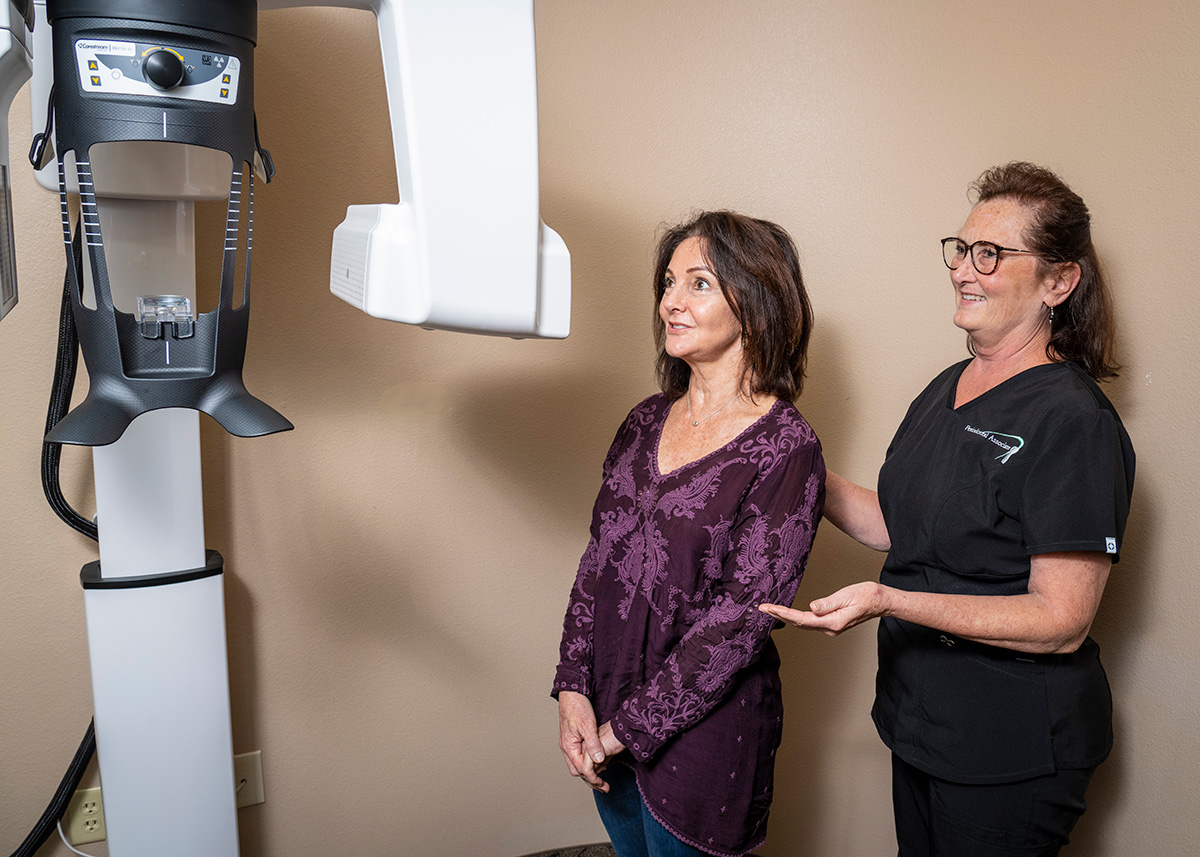
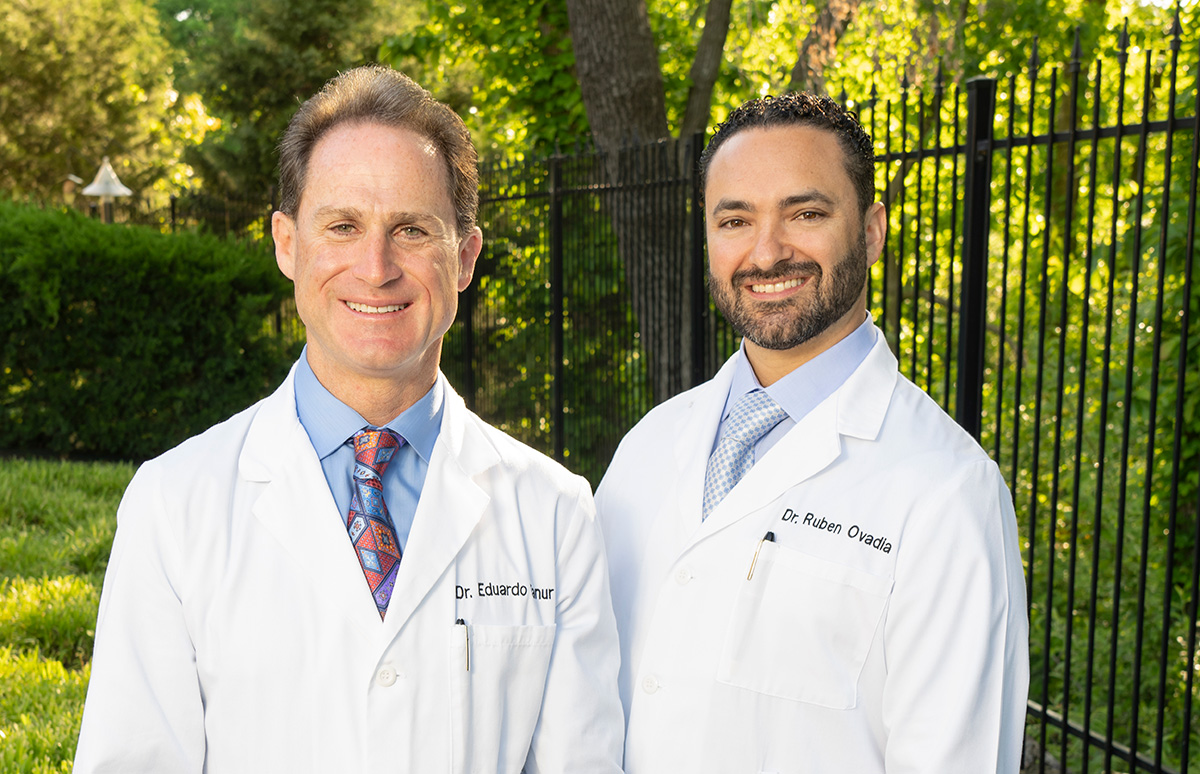
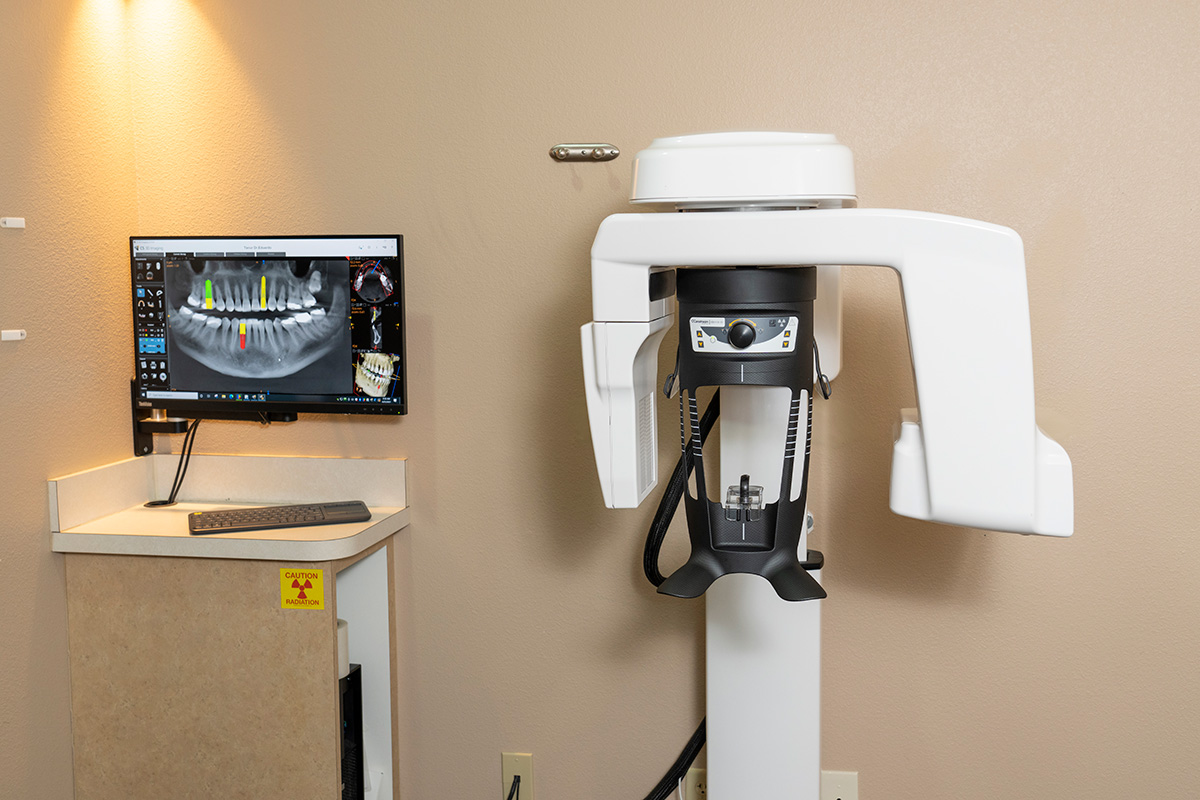
At Dallas Periodontal Associates, your bone decides the number of implants, not the name of the technique. Most full-arch cases use four implants, and some need five or six for extra support. Dr. Eduardo Tanur and Dr. Ruben Ovadia plan every case from a 3D CT scan, and in most cases they can remove failing teeth, place the implants and attach temporary teeth in a single visit. If that same-day timeline is what interests you, our page on new teeth in one day walks through it step by step.
Dentures sit on the gums and rely on suction or paste to stay in place. For many people that means slipping, sore spots and a shrinking list of foods they can eat comfortably. A fixed full-arch bridge solves those problems in a different way.
Every full-arch case moves through the same four stages. The timeline varies from patient to patient, and the doctors will walk you through yours at your consultation.
The best way to know is a consultation. Many of our full-arch patients were told elsewhere that implants weren’t an option for them. A specialist exam and a 3D scan give you a clear answer and a plan built around your own anatomy. If grafting ends up being part of that plan, our page on bone grafting and sinus lifts explains what to expect.
Periodontists complete years of specialty training after dental school, focused on the gums, the jawbone and implant surgery. That training matters most in full-arch cases, where implant angles, bone quality and the health of the surrounding tissue all have to line up.
Dr. Tanur completed his periodontal training at Texas A&M University College of Dentistry and earned his master’s degree in oral biology in 1992. Dr. Ovadia joined the practice in 2010 after three years of specialty training and a master’s degree in oral biology, and he teaches graduate residents the surgical placement of dental implants. You can learn more about both of them on our meet the doctors page, or see how we handle dental implant treatment for single teeth and smaller gaps.
Comfort is part of the plan too. Along with local anesthetic, we offer nitrous oxide, oral sedation and IV sedation given by a board-certified anesthesiologist. Our sedation dentistry page covers how each option works.
The implants are designed as a long-term replacement for your teeth. The bridge on top can wear over the years and may eventually need a repair or a new one, like any restoration. Daily cleaning at home and regular implant cleanings in our office are what keep the implants and gums healthy for the long run.
You are fully numbed during surgery, and we apply a topical anesthetic first so the injection itself is gentle. Patients who want to be more relaxed can choose nitrous oxide, oral sedation or IV sedation. Expect some soreness and swelling for a few days afterward. We give you instructions for managing it, and we are a phone call away if you have questions.
Cost depends on whether you are treating one arch or both, how many implants you need, whether grafting is involved and which material you choose for your teeth. After your exam and 3D scan we give you a written treatment plan with your actual fee. We are not in network with insurance plans, but we will help you with your insurance on request, and we offer financing through CareCredit, Cherry, Sunbit and LendingClub. See our payment options for details.
They describe the same kind of treatment from two angles. All-on-4 refers to how the teeth are supported: a full-arch bridge on four strategically placed implants. New Teeth in One Day refers to the timeline: extractions, implants and temporary teeth in a single visit. Most of our full-arch patients get both.
Care is similar to natural teeth. Brush twice a day with a soft-bristled toothbrush, and use floss threaders, a water flosser or the cleaning tools we recommend to reach under the bridge and around the implants. Keep up with your check-ups and professional cleanings so we can catch any gum or bone changes early.
If you are tired of a loose denture or of teeth that keep failing, a consultation is the first step. We will examine your mouth, take a 3D CT scan and explain whether All-on-4 is right for you, along with the timeline and cost. Call us at (214) 503-1000 or request an appointment online.