Covers exposed roots from gum recession

Gum Grafting for Gum Recession & Gum Strengthening
What is Gum Grafting?
Dr. Ovadia and Dr. Tanur use gum grafting to treat gum recession and thicken or strengthen fragile gums.
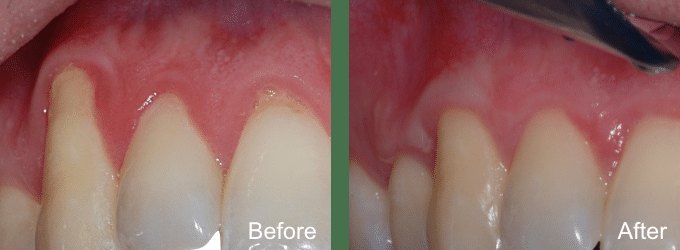
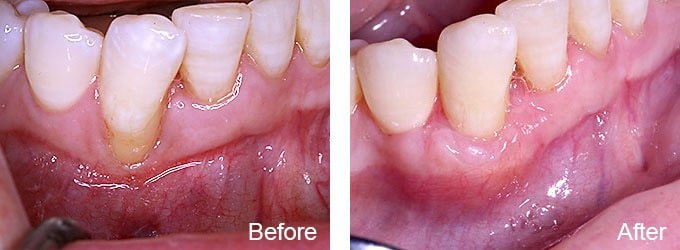
Gum recession occurs when the gums draw back, exposing the tooth roots. Gum grafting, which involves grafting new gum tissue onto the exposed roots, covers and protects them.
Gum grafting can also thicken thin, fragile gums or strengthen the gum tissue around dental implants to avoid inflammation and gum recession.
It can also be done before orthodontic treatment to protect the gums or before a crown or veneer if the gum is too thin or has receded.
If you’re experiencing gum issues or want to protect your smile for the future, gum grafting may be the solution you need.

Real Patient Results
Before-and-after photos from patients treated at Dallas Periodontal Associates. Every smile is different, so your results will depend on your own needs.
What Causes the Gum Recession That Grafting Treats?
Recession rarely has a single cause, so before recommending a graft, Dr. Tanur or Dr. Ovadia looks for what started it. Common causes include:
- Gum disease that has damaged the tissue around the teeth
- Brushing too hard
- Poor brushing and flossing that lets plaque and tartar build up
- Teeth grinding (bruxism) or misaligned teeth that put extra pressure on the gums
- Trauma or injury to the gums
Recession often doesn’t hurt early on. Many patients first notice that their teeth look longer or feel sensitive, and by then the exposed roots are more vulnerable to damage. When active infection is part of the picture, gum disease treatment comes first so the graft heals in healthy tissue. Grafting is one part of gum recession treatment, which also addresses the habits that caused the gums to pull back.
What Does Gum Grafting Do?
How is a Gum Graft Procedure Performed?
Dr. Tanur and Dr. Ovadia gently perform gum grafting to restore your gum health and protect your teeth. The doctors utilize several nonsurgical and minimally invasive techniques to treat mild to moderate gum recession or thin gums, as well as the latest microsurgical techniques for more extensive gum coverage. Treatments are customized to your unique needs and are performed with your comfort in mind.
Using this gum recession treatment technique, Dr. Tanur and Dr. Ovadia create tunnels beneath the gum tissue. They then thread gum grafting material through the tunnels and secure it with sutures. This minimally invasive approach effectively treats multiple areas of gum recession.
If you have sufficient healthy gum tissue nearby, the dentist can gently loosen and reposition it to cover the exposed root. This approach blends your natural tissue for a seamless look. To increase stability, a thin layer of connective tissue—either from your own mouth or a donor source—may be added beneath the gum.
In this technique, doctors directly remove a thin layer of tissue from the roof of your mouth and graft it onto the treatment area. This method is often used for patients with thin gums who need extra reinforcement.
Semilunar grafting involves making a half-moon-shaped incision in the tissue directly above or below an area of gum recession. The center portion is then extended to cover exposed roots, while the corner areas remain attached. This technique requires the availability of adequate tissue.
This type of pedicle graft uses your own tissue adjacent to the affected tooth. The doctors carefully collect a section of tissue and stretch it over the exposed root on the neighboring tooth.
Which Gum Grafting Technique Is Right for You?
There is no single gum graft. The doctors use several nonsurgical and minimally invasive approaches for mild to moderate recession or thin gums, and microsurgical techniques when more coverage is needed. Your exam decides which one fits.
| Technique | How it works | Often a fit for |
|---|---|---|
| Tunneling technique | Small tunnels are made beneath the gum, graft material is threaded through and secured with sutures, without cutting around each tooth | Several areas of recession treated at once |
| Coronally advanced flap | Healthy nearby gum is loosened and moved to cover the root; a thin layer of connective tissue from your mouth or a donor source may be added beneath it | Patients with enough healthy gum next to the recession |
| Free gingival graft | A thin layer of tissue is taken from the roof of the mouth and placed on the treatment area | Thin gums that need extra reinforcement |
| Semilunar technique | A half-moon incision above or below the recession lets the tissue be moved over the exposed root | Recession with adequate surrounding tissue |
| Lateral pedicle flap | Tissue from beside the affected tooth is stretched over the exposed root | A single tooth with healthy gum next to it |
The doctors will explain your options for donor tissue, including minimally invasive choices, before treatment.
What Happens on the Day of Your Gum Graft?
Comfort first. You receive a local anesthetic so you don’t feel pain during the procedure. If you’re anxious, sedation dentistry options range from a sedative pill with nitrous oxide to IV sedation given by a board-certified anesthesiologist.
The procedure. In a common type of gum graft, the doctor carefully places and secures a small band of tissue over the area of recession to cover the exposed root.
How long it takes. Most procedures take about an hour, depending on how many teeth are treated.
Supporting healing. The practice uses Platelet-Rich Fibrin (PRF), a natural healing agent derived from your own blood, to help the treated area heal.
What Is Recovery Like After Gum Grafting?
You go home with detailed aftercare instructions. For the first few days you eat soft, cool foods and avoid brushing the surgical site. Most patients feel ready to return to work the day after their procedure.
About two weeks later, a follow-up visit lets the doctor check your healing and review gentle hygiene techniques. Protecting the result long term means brushing gently and addressing habits such as grinding that contributed to the recession.

What Are the Benefits of a Gum Graft?
The Gum Graft Specialists You Can Trust
Dr. Tanur and Dr. Ovadia bring extensive training and experience to treating your gum issues. They take a personalized approach, using a range of precise techniques tailored to your needs. Offering sedation options, they prioritize your comfort for a smooth, stress-free treatment. Their goal is to help you achieve a healthier, more confident smile that lasts a lifetime.
Dr. Eduardo Tanur became a certified periodontist in 1992, opened this practice in 2001 and taught periodontal students at Texas A&M University College of Dentistry from 1996 to 2001. Dr. Ruben Ovadia completed his periodontal training at Tufts University, joined the practice in 2010 and serves as an Assistant Professor at Texas A&M. Both are Diplomates of the American Board of Periodontology, a distinction earned by only 10% of periodontists.

How Much Does Gum Grafting Cost?
The cost of gum grafting depends on your treatment plan: how many teeth are treated, which technique fits your gums and the type of graft material. You’ll receive a written treatment plan with transparent pricing before any work begins.
The practice is not in network with dental insurance, but the team will help prepare your claim and can file it electronically on your behalf. Prepaying in full earns a 5% courtesy discount, and financing is available through CareCredit, Sunbit, Cherry and LendingClub, all outlined under payment options.
Gum Grafting FAQs
The area is numbed with local anesthetic, so the procedure itself should not be painful, and sedation is available. Expect some tenderness for a few days afterward, managed with the aftercare instructions you are given.
Yes. Gum grafting can strengthen the tissue around dental implants to help avoid inflammation and recession. It can also be done before orthodontic treatment to protect the gums, or before a crown or veneer if the gum is too thin or has receded.
Depending on the technique, tissue may come from nearby gum, from the roof of your mouth, or from a donor source. The doctors will explain the options, including minimally invasive ones, at your consultation.
Often, yes. The tunneling technique is designed to treat multiple areas of recession at once, so neighboring teeth can be grafted in the same procedure. Your exam decides whether it suits your gums.
If your gums are receding, your teeth feel sensitive or a dentist has told you your gums are thin, visit our Dallas periodontists at 8722 Greenville Ave #100 or call (214) 503-1000. Request an appointment to find out which grafting approach fits your gums.